Magneto-Cyclone-Centrifuge (MC$^2$)
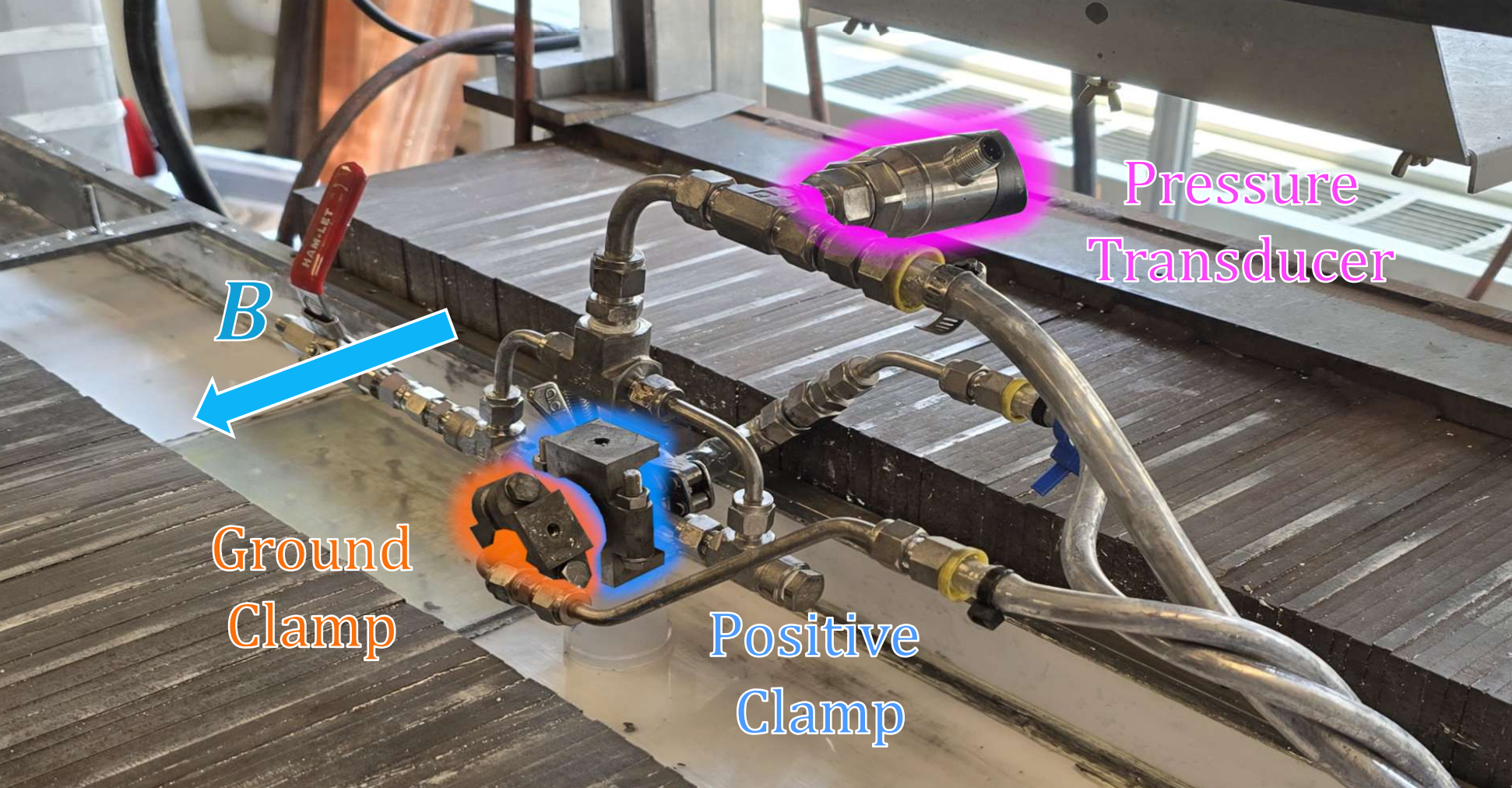
The Magneto-Cyclone-Centrifuge (MC$^2$) experiment was designed as a proof of concept for a in-vessel linear centrifuge for processing tritium enriched liquid lithium metal from the divertor. The MC$^2$ is modelled after industrial hydro cyclones, which bifurcate an incoming stream of liquid metal into streams depleted of particles (overflow) and enriched with particles (undeflow).
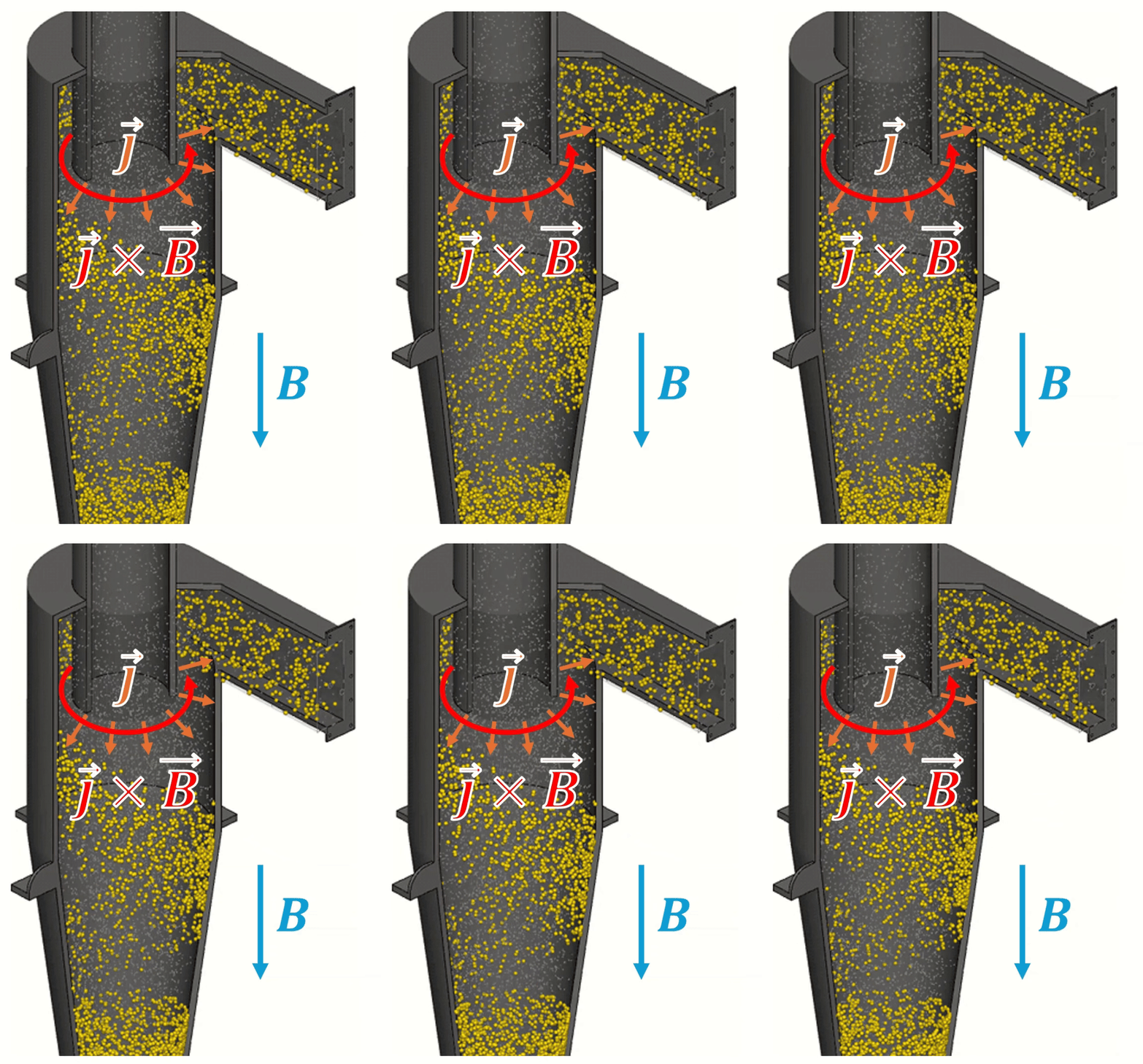
Centrifugal motion on the particles typically comes from a tangential, high velocity inlet stream. Fast flows near the coils are prohibited by the intense magnetic field. Instead, we leverage existing fields via radially applied in the body of the MC$^2$, which reproduce the desired cyclonal motion.
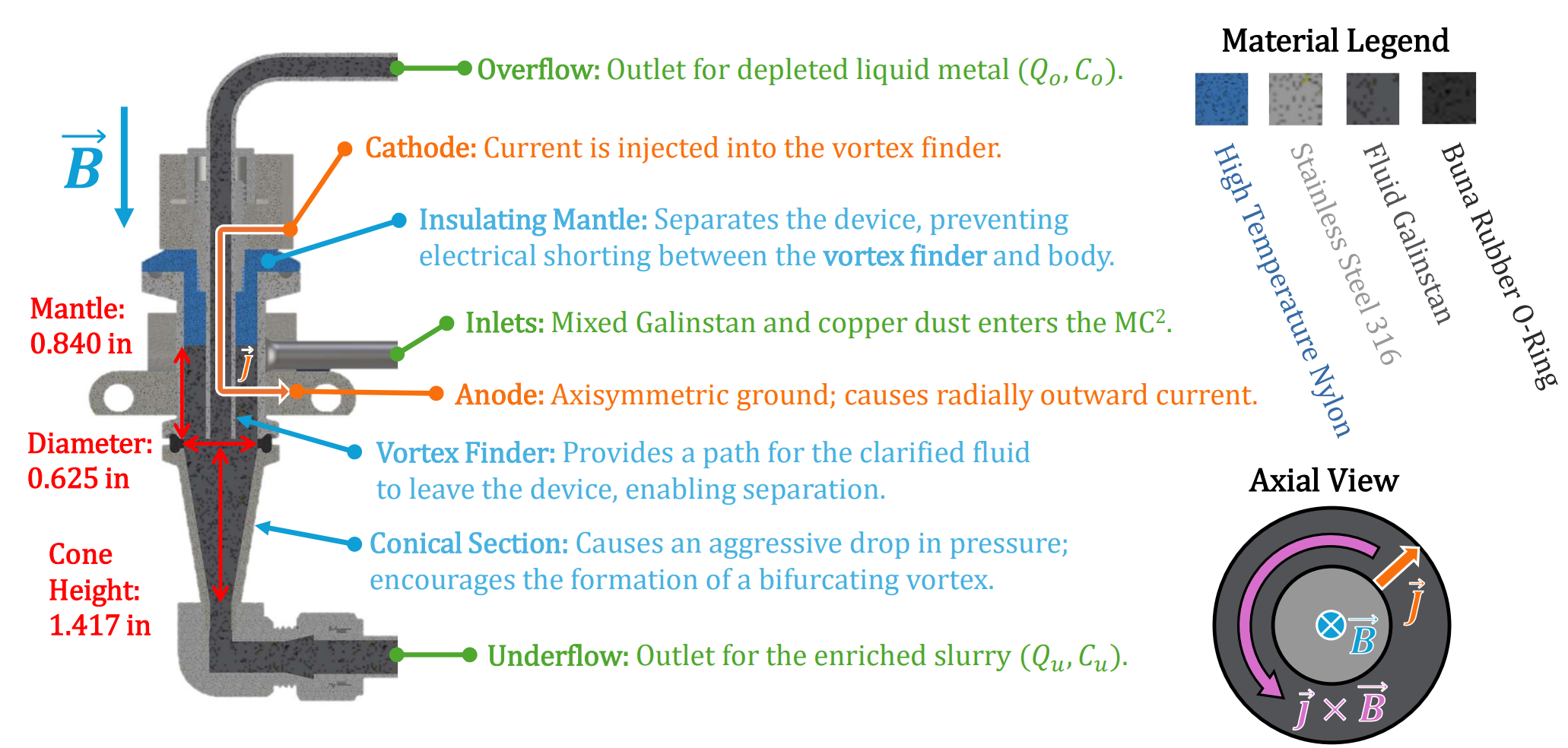
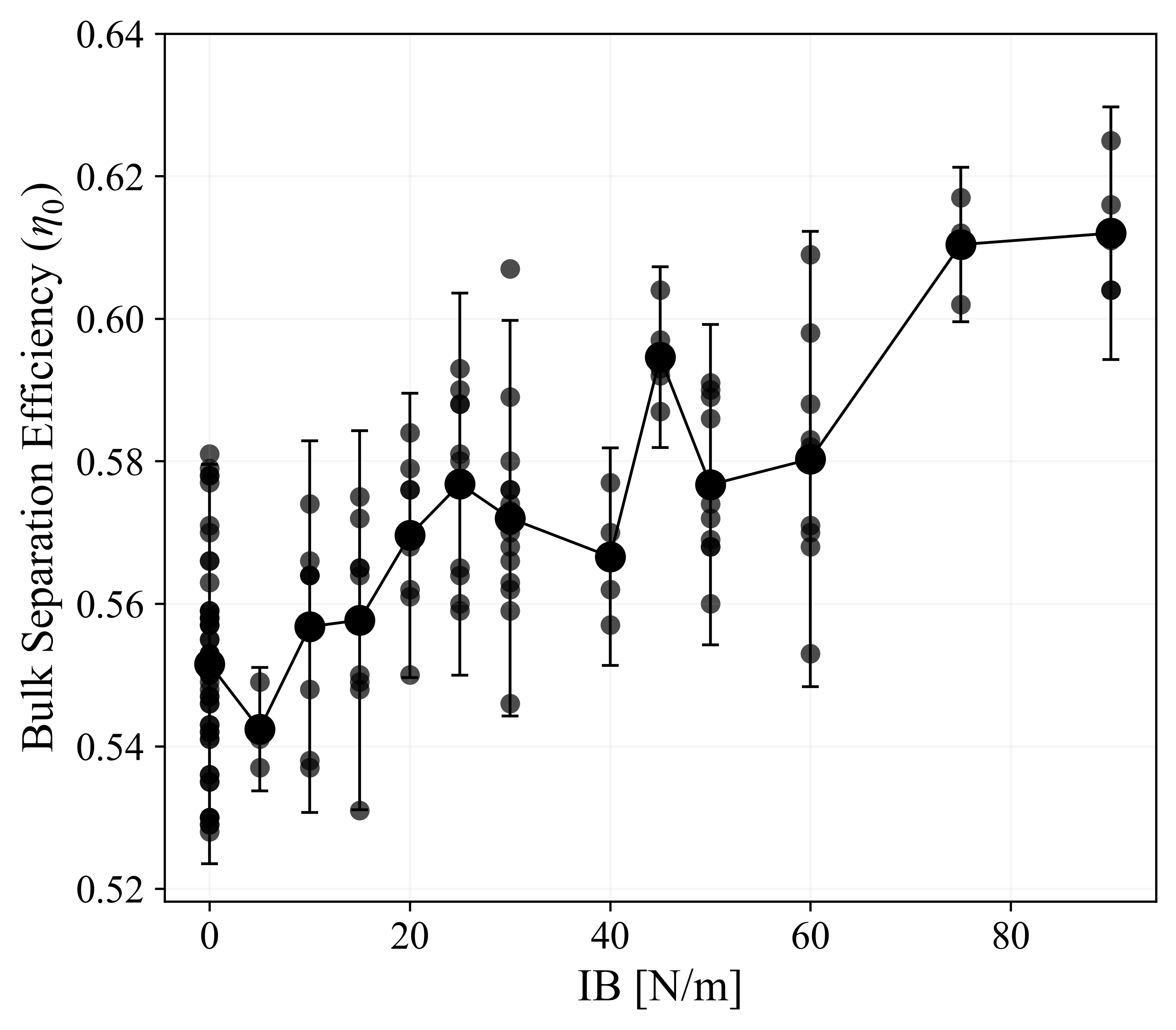
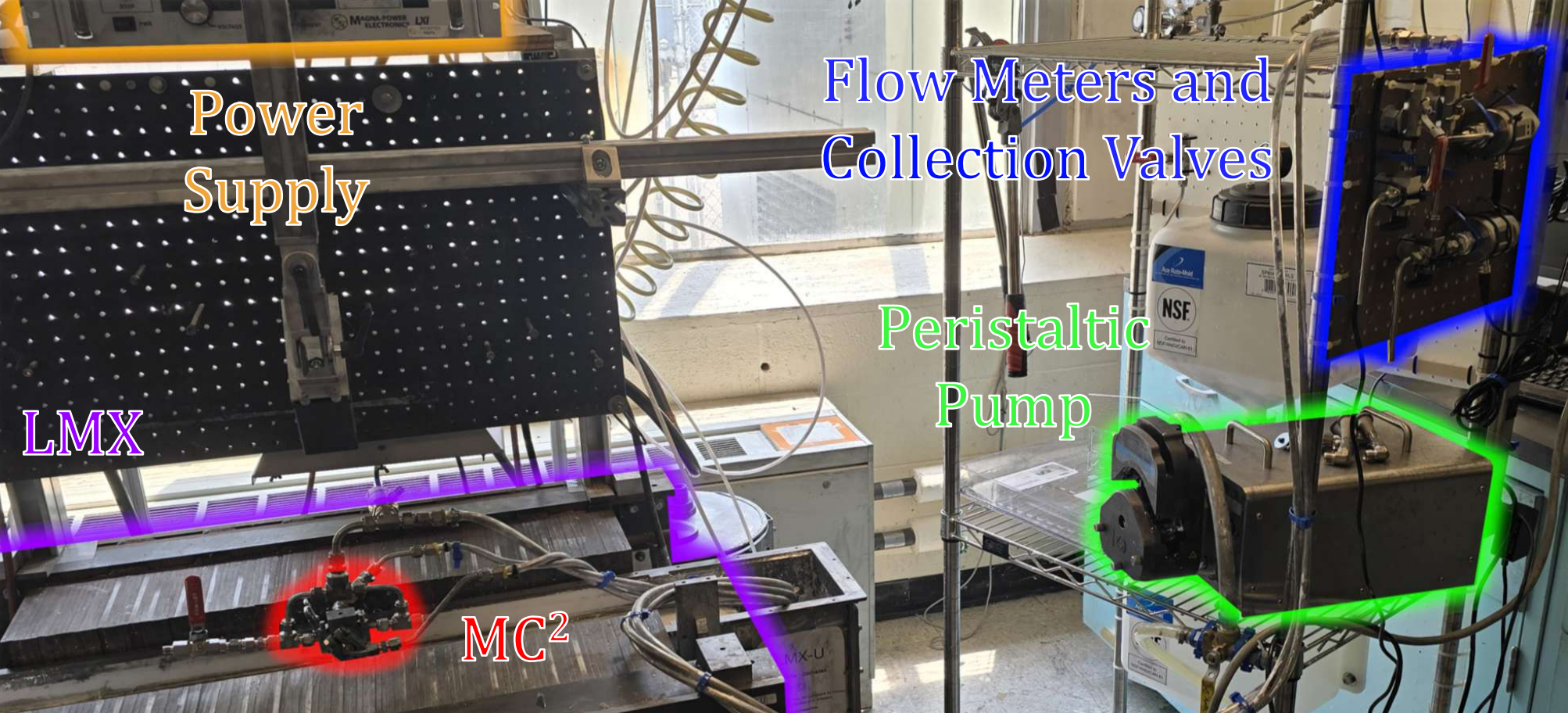
Currently, the prototype has been experimented with Galinstan liquid metal and solid copper particles, proving physical separation of LM+particles is possible by entirely electrostatic processes.
The lithium version of the MC$^2$ is currently under construction,with completion expected by late 2026, and the experimental results by late 2027.